

(Link to the article in Spanish: https://solorock-uruguay.com/2025/10/12/phantasmagoria-the-damned-40-anos-de-un-disco-unico/)
A few weeks ago, when Ariel Scarpa (the editor of Sólo Rock) suggested we each choose our five favorite albums, I knew that in my case I could only start from number two —because the number one spot has been taken for decades. There are albums that, once you hear them, open a door that never fully closes again… and with Phantasmagoria, that’s exactly what happened to me.
BEFORE PHANTASMAGORIA
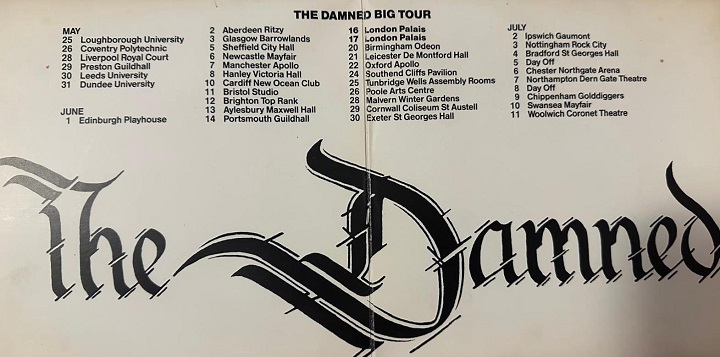
After the album Strawberries (1982), The Damned ran into problems with Bronze Records, their label at the time, which went bankrupt in 1983. The company’s financial troubles led to a conflictive split, and for a while the band was left without a record deal, surviving through tours and isolated recordings. In 1984, Captain Sensible decided to focus on his solo career, with hits like “Happy talk” and “Wot”, which weakened the band’s lineup but, at the same time, allowed Dave Vanian and Roman Jugg to take full creative control.
Gonzalo Pedraja: How do you remember the time when you went from being a keyboard player to becoming the main guitarist, just before Phantasmagoria?
Roman Jugg: Well, everything moved really fast back then. There was tension in The Damned because Captain Sensible was busy with that silly version of “Happy talk.” The Damned didn’t have a record deal, but we decided to carry on anyway. Rat Scabies and Dave Vanian asked me to take on the role of guitarist and, of course, I was nervous at first —but it seemed to work out fine.
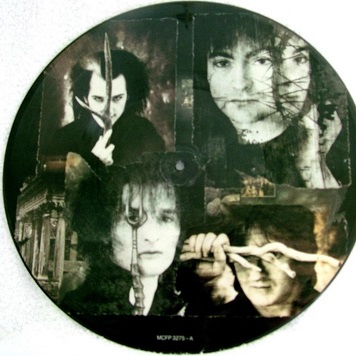
THE MCA DEAL
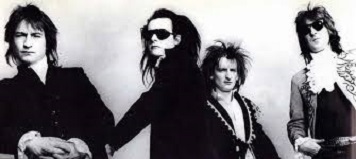
With Roman Jugg now on guitar and Bryn Merrick on bass (alongside Dave Vanian on vocals and Rat Scabies on drums), The Damned managed to sign with MCA Records.
The label saw potential in the band because:
- Captain Sensible’s pop success had proven there was still a market around the name The Damned.
- Gothic aesthetics were on the rise (The Cure, The Sisters Of Mercy, Bauhaus).
- Dave Vanian had a strong visual profile, ideal for the era of MTV and Top of the Pops.
SCOPE OF THE DEAL
- Funding for a high-quality studio album.
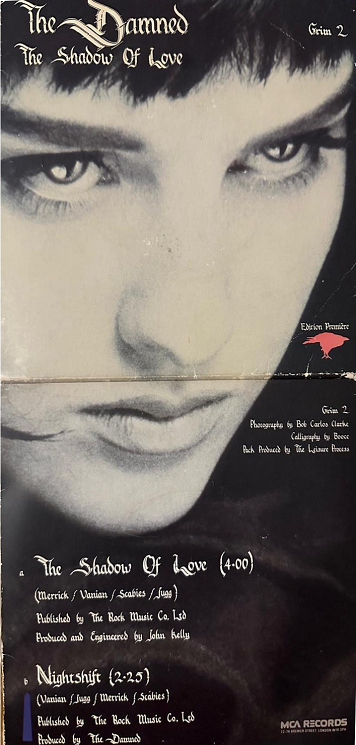
- Singles designed for chart success (“Grimly fiendish,” “Shadow of love,” and “Is it a dream”).
- MCA encouraged extended 12″ versions aimed at the club scene.
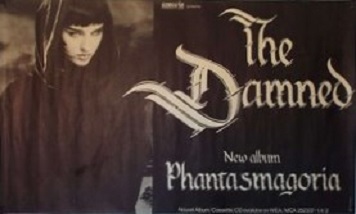
- Larger marketing campaigns than before, including elaborate cover art, professional videos, and strong TV promotion.
While MCA provided resources, they also pressured the band to sound more accessible —which led to pop-leaning songs that upset some of the more purist fans. Rat Scabies was never comfortable with these commercial expectations, which would later add to the band’s internal tensions.
Gonzalo Pedraja: How did you experience the reaction to the album, both from the press and from fans?
Roman Jugg: Some loved it, others hated it. I don’t really like the final production. It was MCA trying to make The Damned commercial. I would’ve preferred it to sound rougher —the songs would’ve had the same quality anyway.
THE COVER ART
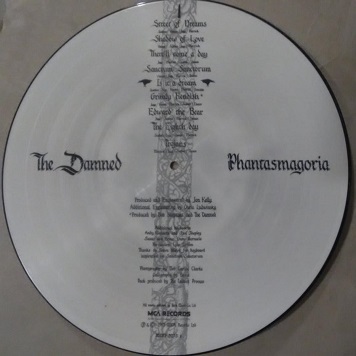
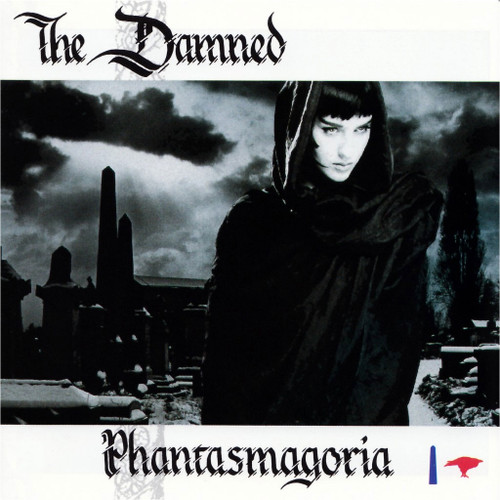
The cover and back photos were shot by Bob Carlos Clarke in the Victorian cemetery of Kensal Green, London. The cover image carries a strong gothic imprint: model Susie Bick (now Nick Cave’s wife) becomes a true muse among tombstones and damp vegetation, creating an unmistakably funeral atmosphere. The back cover conveys a feeling of silence, with elegant typography for the credits and tracklist. The use of black and white throughout the artwork creates a life-and-death contrast —the gothic mood matters more than the musicians’ faces, which are absent from the sleeve.
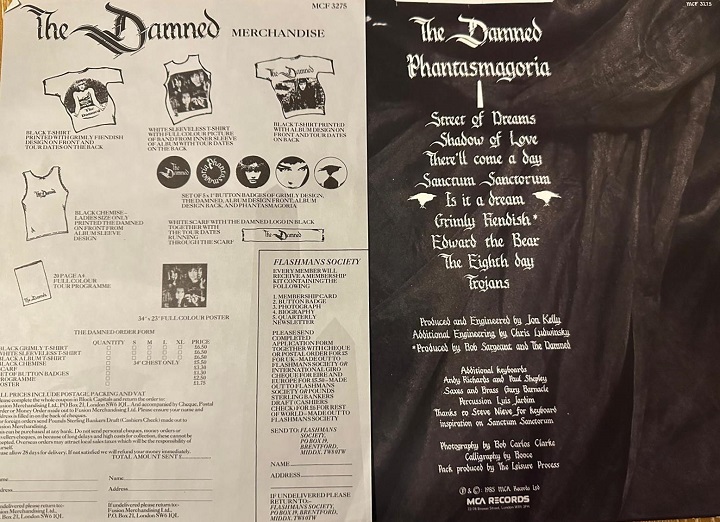
Inside, apart from an inner sleeve with photos of the band, the original UK edition included a merchandise order sheet (T-shirts, badges, posters) —now a highly sought-after collector’s item. Complete copies with that insert are considered very valuable pieces.
TECHNICAL DATA
- Release date: July 15, 1985
- Country: United Kingdom
- Label: MCA Records
- Catalogue number: MCA DAM 1
- Producers: Jon Kelly, Bob Sargeant, The Damned
- Programmer: Hans Zimmer
- Studio: Eel Pie Studios, London
- UK Chart position: #11
- Certification: Silver (over 60,000 copies sold in the UK)
RECORDING THE ALBUM
Gonzalo Pedraja: The album has a distinctive, atmospheric gothic sound. How much do you think your own contribution influenced that direction?
Roman Jugg: At the time I was working closely with Dave Vanian. We shared similar musical and cinematic interests, and when that happens it naturally shows in the songwriting —the music becomes a mirror.
Gonzalo Pedraja: Which films or artistic influences shaped the mood and sound of Phantasmagoria?
Roman Jugg: Early on I realized Dave and I shared a huge passion for film —not for any specific genre, you know, but horror, comedy, and B-movies. We’d talk about them and analyze them late into the night. We also loved TV shows like The Munsters. But it was the atmosphere of those dark films that created the mold that shaped Phantasmagoria.
Gonzalo Pedraja: What was the chemistry like between Dave Vanian, Rat Scabies and Bryn Merrick during the sessions?
Roman Jugg: Dave wasn’t exactly reliable; Rat and Bryn did their parts and disappeared, so I had to finish the work.
Gonzalo Pedraja: Do you have any particular memories or anecdotes from the recording sessions?
Roman Jugg: Meeting Pete Townshend was special for me —I’d always loved The Who. It was his studio, and he had a pinball machine there. He asked, “Has anyone hit the jackpot?”. I said, “Yes, I have!”. He replied, “Well, then I suppose you’re the guitarist”.
Gonzalo Pedraja: You said MCA wanted a more commercial sound, while you would’ve preferred something rawer. How do you imagine the album would’ve sounded with total artistic freedom?
Roman Jugg: The early demos still keep that essence. The final product was too polished, with added elements we weren’t comfortable with. Those first experiments had the band’s essential rawness, which was eventually diluted.
THE SONGS
Side A
1.Street of Dreams (5:38)
2.Shadow of Love (3:51)
3.There’ll Come a Day (4:15)
4.Sanctum Sanctorum (6:27) – organ: Roman Jugg
Side B
- Is It a Dream (3:27) – co-written with Captain Sensible
- Grimly Fiendish (3:50)
- Edward the Bear (3:37) – vocals: Roman Jugg
- The Eighth Day (3:46)
- Trojans (4:53)
Singles:
- Grimly Fiendish – March 1985 – UK #21 – Inspired by a 1960s British comic character.
- The Shadow of Love – June 1985 – UK #25
- Is It a Dream – September 1985 – UK #34
- Eloise – January 1986 – UK #3 – A cover of Barry Ryan’s 1968 classic, The Damned’s most successful single.
Though not on the original LP, it reinforced the band’s gothic phase and strengthened their link with MCA. Later reissues of Phantasmagoria include it as a bonus track.
Gonzalo Pedraja: On “Edward the bear,” you take lead vocals. How did that come about, and what do you remember from that experience?
Roman Jugg: Everyone got a chance to sing… I suppose I was more in tune than Rat, Bryn, and sometimes Vanian! (laughs).
Gonzalo Pedraja: If you had to pick one or two favorite songs from the album, which would they be, and why?
Roman Jugg: “Is it a dream,” because it was written for my father, and “Sanctum sanctorum,” because it’s a masterpiece of atmosphere.
Gonzalo Pedraja: You mentioned that “Is it a dream” was written for your father —a touching story. Could you tell me a bit more about that?
Roman Jugg: Back home in Wales, we had a piano at the foot of the stairs, and it was my first stop every day. I wrote that piano riff there. It took about twenty minutes —it was originally meant as a B-side for “Thanks for the night”. Captain thought it was too good for that, so it ended up on Phantasmagoria. Ironically, he left the band soon after.
Gonzalo Pedraja: Forty years later, what does Phantasmagoria mean to you today?
Roman Jugg: It’s like your first car or your first girlfriend —you tend to forget, but it’s always there in your memory.
Gonzalo Pedraja: Tell me about Bryn Merrick: what are your memories of him, both musically and personally?
Roman Jugg: Bryn was a beautiful soul, carefree on the surface, but battling his own demons. He always had a smile. He was a fantastic bassist. I miss him.
Forty years since the album that won me over the very first time I heard it… forty years since the record that hypnotized me from its cover to its songs… forty years of listening to it at least once a week (go ahead, do the math). You can be a fan of a football team, of a religion, or of a political party, but… of an album? Yes. I’m living proof you can.
Gonzalo Pedraja

P.S.: I want to thank Roman Jugg for his enormous and selfless generosity in helping with this article and for his kind words about my previous pieces. (Believe me, Roman, I’m patient enough to wait for the day when I finally get to hear those “demos” my ears truly deserve. (laughs)
 SÓLO ROCK Uruguay